
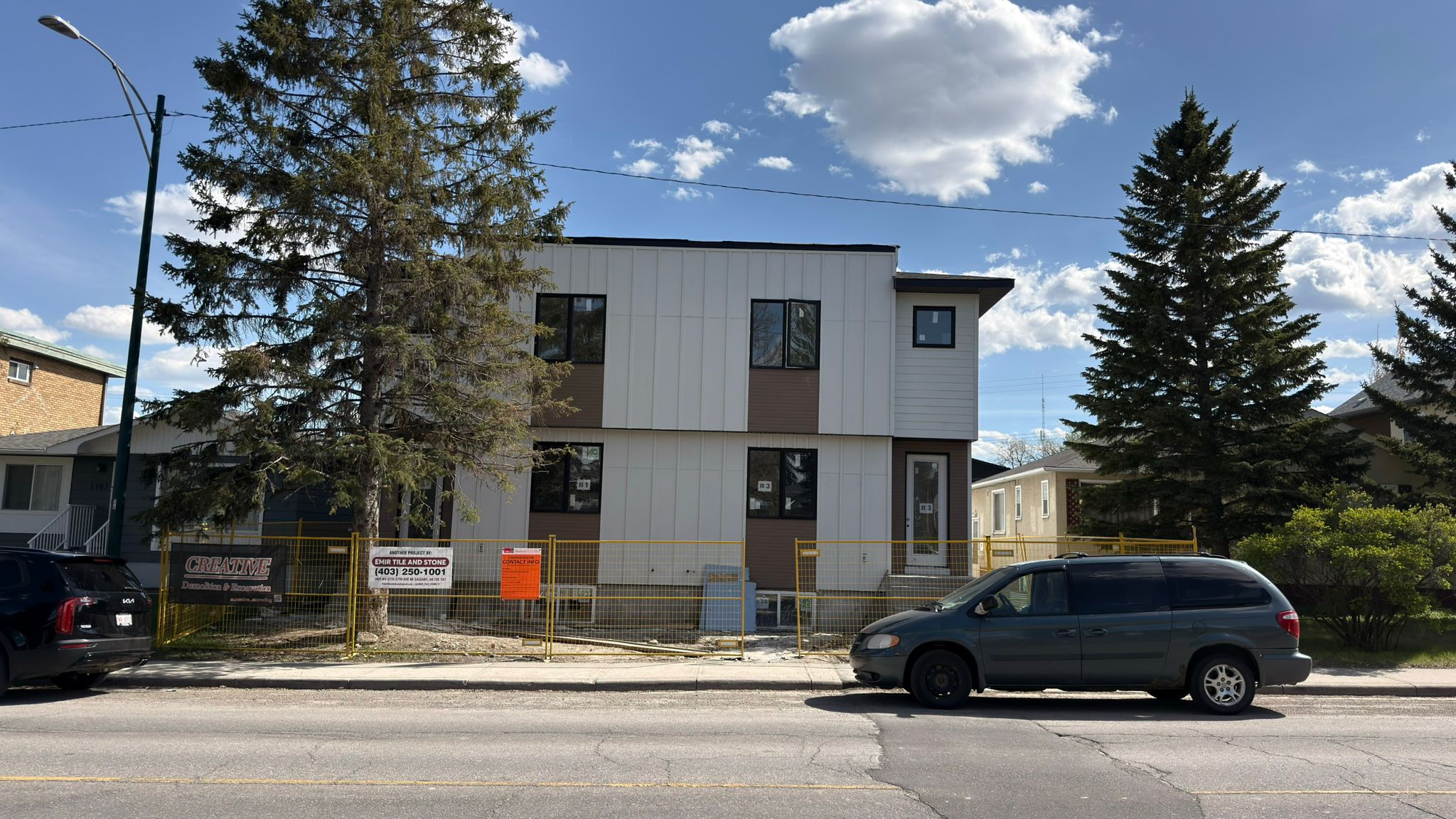
10 Questions to Ask a Custom Home Builder in Calgary
Before hiring a custom home builder in Calgary, ask these 10 questions: How do you price the project and handle cost overruns? Can I see a sample contract and payment schedule? Who manages my project day-to-day? How do you vet your subcontractors? What does your warranty cover? The answers reveal whether a builder operates with transparency and discipline — or improvises as they go.
Most Calgary buyers spend months choosing a floor plan and a lot, then spend thirty minutes choosing the builder. That order is backward.
A custom home is a multi-year, seven-figure commitment. The builder you choose controls the budget, the schedule, the quality of every trade, and the experience you’ll have when something — inevitably — goes sideways. The right questions, asked early, tell you whether you’re dealing with a builder who has systems, or one who is winging it.
This checklist is designed to help you evaluate any custom home builder in Calgary — including us. We’d rather lose a client who wasn’t the right fit than take on a project we can’t execute well.
The 10 Questions to Ask Any Custom Home Builder in Calgary
1. How do you price a project, and what happens if costs change?
Why it matters: Pricing is where most builder-client relationships break down. A builder who gives you a number without explaining the methodology — fixed-price, cost-plus, or hybrid — is giving you a number you can’t trust. Calgary’s construction market is volatile; material costs and trade labour can shift meaningfully between design and groundbreak. You need to know exactly how that risk is allocated.
What a good answer looks like: The builder explains clearly whether your contract is fixed-price (builder absorbs cost increases above the agreed scope) or cost-plus (you pay actuals plus a margin). They can describe what a contingency allowance covers, what triggers a change order, and how overruns are approved before they’re incurred — not after. Vague answers like “we’ll figure it out” are a red flag.
2. Can I see a sample contract and a breakdown of the payment schedule?
Why it matters: Reputable builders have standard contracts they use on every project. If a builder hesitates to show you a sample contract before you’re under agreement, ask yourself why. The payment schedule is equally revealing: draw schedules tied to construction milestones protect you; large upfront payments or irregular draws that don’t correspond to completed work do not.
What a good answer looks like: The builder produces a sample contract readily and walks you through the draw schedule — typically tied to milestones like foundation complete, framing complete, rough-ins complete, drywalling complete, and possession. Each draw should correspond to something you can verify.
3. Who manages my project day-to-day, and will I have one point of contact?
Why it matters: The person who sells you the build is often not the person who manages it. In Calgary’s custom home market, it is common for buyers to discover mid-construction that their primary contact is a sales representative, while the actual site management is fragmented across subcontractors with no single accountable party. When a framing issue arises at 7 a.m. on a Thursday, you need to know exactly who to call — and that person needs to have authority to act.
What a good answer looks like: The builder names a specific project manager (not “our team”), describes their role in daily site supervision, and explains how communication with clients is handled — frequency of updates, preferred channels, and response time expectations. Full project management, not coordination, is what you’re looking for.
4. How do you select and manage your subcontractors?
Why it matters: Your custom home is built by a network of trades — framers, plumbers, electricians, HVAC technicians, concrete crews, finish carpenters. The builder’s relationship with those trades directly affects your project’s quality, schedule, and cost. A builder who chases the lowest bid on every trade has different incentives than one who maintains long-term relationships with vetted subtrades. Calgary’s skilled trades market is competitive; builders with strong relationships get prioritized scheduling. Builders who don’t get whoever is available.
What a good answer looks like: The builder can name key trade partners, describe how long they’ve worked together, and explain their vetting process — insurance, licensing, quality standards, and how deficiency callbacks are handled. “We use whoever is available” is not an acceptable answer on a luxury build.
5. What does your warranty cover, and how do you handle deficiencies after possession?
Why it matters: Alberta’s New Home Warranty Program establishes minimum coverage: one year on labour and materials, two years on delivery and distribution systems (plumbing, heating, electrical), and ten years on major structural components. The minimum is a floor, not a ceiling. What distinguishes a quality builder is how they handle deficiencies before and after possession — their after-care process, not just the warranty documentation they hand you at keys.
What a good answer looks like: The builder confirms enrollment in the Alberta New Home Warranty Program, explains any additional coverage they carry, and describes their specific process for handling possession deficiency lists — timeline for remediation, who owns the follow-up, and how escalation works if items aren’t resolved. The warranty conversation should feel routine for them, not defensive.
6. Can I speak with three recent clients?
Why it matters: References are standard due diligence, but the details matter. References should be from completed projects within the last two years — not clients who are still mid-build and whose experience is incomplete. A builder should be able to provide multiple references without hesitation. If they can only produce one, or if the references are from projects completed five years ago, that is worth noting.
What a good answer looks like: The builder provides three or more references from completed projects and doesn’t screen the questions you can ask. When you call those references, ask specifically: Did the project come in close to the original budget? Was the schedule accurate? How were deficiencies handled? Would you build with them again?
7. How many projects do you have under construction right now?
Why it matters: A builder’s attention is a finite resource. A project manager overseeing twelve active builds simultaneously cannot give each one the oversight a luxury custom home requires. This is one of the least-asked questions on a buyer checklist and one of the most important. Volume-focused builders and boutique luxury builders operate with fundamentally different ratios of management attention per project.
What a good answer looks like: The builder is transparent about their current build count and explains how they staff project management relative to volume. For a luxury build, you want to understand whether your PM is dedicated or juggling. A builder who won’t answer this question directly is telling you something.
8. How involved can I be in design decisions, and at what stages?
Why it matters: “Custom” means different things to different builders. Some offer deep design flexibility across architecture, layout, finishes, and systems. Others offer selection packages with limited variation. Understanding the design process — and the deadlines within it — determines whether the finished home reflects your priorities or the builder’s standard template.
What a good answer looks like: The builder describes a structured design process: when architectural decisions are finalized, when selections are due, and what happens if you want to revisit something after a stage is complete. They should also be clear about what is genuinely flexible and what is fixed by their construction process. Transparency here prevents frustration later.
9. What happens if I want to make a change mid-construction?
Why it matters: Change orders are a normal part of construction. What varies is how builders handle them. A disciplined builder documents every change in writing, prices it before the work proceeds, gets client approval, and updates the schedule accordingly. A disorganized builder makes verbal agreements, bills at the end, and leaves clients disputing charges they didn’t expect.
What a good answer looks like: The builder describes a written change order process: how a change request is submitted, how it is priced (labour and materials, plus any margin), how timeline impacts are communicated, and what the approval process is before work proceeds. No surprises should be the operating principle.
10. Have you built in my target community, and do you understand the permitting requirements there?
Why it matters: Inner-city Calgary communities — Altadore, Marda Loop, Elbow Park, West Hillhurst, Upper Mount Royal, and others — involve permitting complexity that suburban new construction does not. Infill projects often require Development Permits in addition to Building Permits. Some communities have Heritage Area overlays, Established Area design guidelines, or require community association notification. A builder without inner-city infill experience can underestimate permitting timelines by months.
What a good answer looks like: The builder can describe specific projects they’ve completed in your target community or in comparable inner-city locations. They understand the difference between a Development Permit and a Building Permit, can estimate realistic timelines for each, and have existing relationships with City of Calgary Development Authority reviewers. Inner-city Calgary is not the same as building on a bare lot in a new suburb — experience here is not transferable from other markets.
Five Red Flags to Watch For
Even without asking the right questions, certain patterns signal a builder you should investigate further before signing anything.
- No fixed contract or unwillingness to commit terms in writing. Every legitimate custom home builder operates under a written contract. Verbal agreements, letters of intent without binding terms, or pressure to “get started now and sort the paperwork later” are not acceptable on a project of this scale.
- Reluctance to share references from completed projects. A builder with a strong track record wants you to speak with past clients. Resistance — in any form — suggests the track record doesn’t hold up to scrutiny.
- A bid that is significantly lower than others, with vague inclusions. In Calgary’s construction market, a bid that comes in 20–30% below comparable quotes is not a bargain — it is a signal that inclusions are missing, allowances are unrealistically low, or the builder intends to recover margin through change orders. Understand exactly what is included before comparing prices.
- No dedicated project manager assigned to your build. “Our team” is not a project manager. If the builder cannot name the person who will be responsible for your site daily, you do not have a project manager — you have a hope.
- No clear warranty documentation or after-care process. A builder who becomes vague when warranty and deficiency handling comes up is telling you what your experience will be after possession. The post-possession relationship matters as much as the construction process.
A Note From Arkadian Homes
“The question I’d most want a client to ask me is: ‘What has gone wrong on a past project, and how did you handle it?’ Any builder who claims nothing ever goes wrong is either inexperienced or not being honest. What matters is the system you have for handling problems when they arise — because they will. At Arkadian, we’ve had cost pressures from material lead times, trade scheduling conflicts, and weather-driven delays. The question isn’t whether those things happen. The question is whether your builder communicates them immediately, has a plan before they tell you about it, and takes responsibility without deflection.”
— Segun Akinrolabu, Founder, Arkadian Homes
Segun’s background spans banking, petroleum geology with Royal Dutch Shell, and real estate development. That combination — financial discipline, engineering methodology, and project management under high-stakes conditions — shapes how Arkadian approaches every build, whether a $650/sq ft inner-city custom home or a luxury quick-possession.
Why Arkadian Builds the Way It Does
Arkadian Homes builds luxury custom and quick-possession homes across Calgary’s established inner-city communities — Altadore, Marda Loop, Elbow Park, West Hillhurst, and Upper Mount Royal, among others. Custom builds are priced from $650 to over $1,000 per square foot; luxury quick-possession homes range from $500 to $1,000 per square foot.
The same standard applies to both build types: full project management, vetted trade relationships, written change order processes, and a post-possession after-care commitment that doesn’t end at the key handoff.
We apply every question in this checklist to ourselves. We’d encourage you to do the same.
Frequently Asked Questions
What are the most important questions to ask a custom home builder?
The most important questions cover pricing transparency (fixed-price vs. cost-plus, contingency handling), contract terms and payment schedule structure, who manages your project day-to-day, how subcontractors are selected and managed, and what the warranty and post-possession deficiency process looks like. These five areas are where most builder-client problems originate.
How do I know if a custom home builder is reputable in Calgary?
Ask for references from projects completed within the last two years — not current builds — and call them. Verify the builder is registered with the Alberta New Home Warranty Program. Check whether they hold a valid business licence and that key trade partners are licensed and insured. A reputable builder will welcome this due diligence rather than resist it.
What is a cost-plus contract vs. a fixed-price contract for a custom home?
A fixed-price contract sets the total build cost in advance; the builder absorbs cost increases within the agreed scope. A cost-plus contract charges the actual cost of labour and materials plus a defined builder margin, so the final price can vary. Both structures are legitimate; what matters is that the contract is clear, written, and that you understand which risk you’re accepting. Cost-plus contracts require a higher level of trust and transparency from the builder.
What warranty do custom home builders in Calgary provide?
Custom home builders in Alberta are required by law to provide coverage under the Alberta New Home Warranty Program: one year on labour and materials, two years on delivery and distribution systems, and ten years on major structural defects. Quality builders enroll in this program as a standard practice and often go beyond the minimum through their own after-care commitments. Always confirm enrollment before signing.
What are red flags when hiring a custom home builder?
Key red flags include: no written contract or pressure to start without one; a bid significantly below comparable quotes with vague inclusions; unwillingness to provide references from completed projects; no named project manager for your build; and vague or defensive responses when you ask about warranty and deficiency handling. A low bid is not a bargain if inclusions are missing or if change orders will make up the difference.
Considering a custom home in Calgary’s inner-city?
If you’re evaluating builders and want to apply this checklist to an Arkadian project, we’re happy to walk through every question with you — including the ones we’d find difficult to answer. Start with a conversation: no pressure, no pitch, just clarity on whether we’re the right fit.
Ready to get started? Book a discovery call or call +1 (403) 259-0209.
Last updated: August 15, 2026